
SILVER SPRING, Maryland, Oct 23 — The U.S. Food and Drug Administration on October 20 approved Hibsago (bepirovirsen), developed by GSK, for chronic hepatitis B in certain adults — the first antisense oligonucleotide the agency has ever authorized for the disease. In two large international trials, the drug let nearly one in five patients achieve a functional cure: keeping the virus under control six months after stopping all hepatitis B medication.
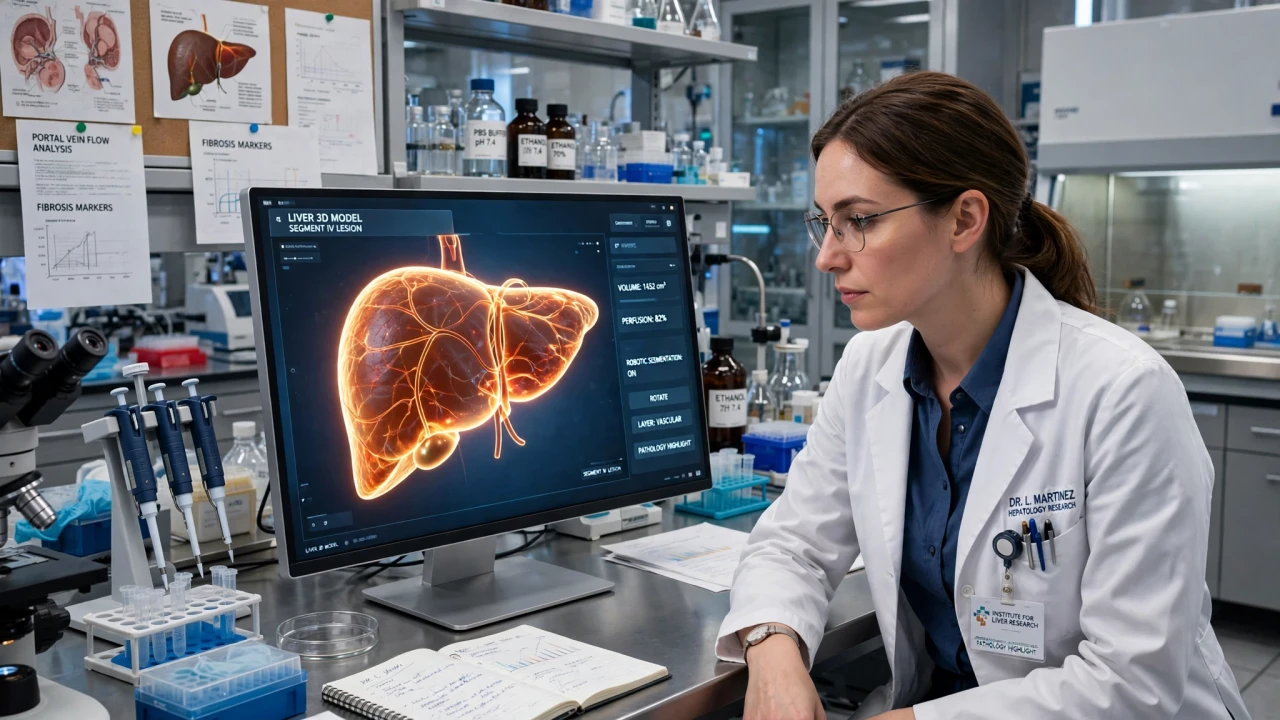
Illustration: a medical researcher in a modern laboratory examining a glowing 3D model of a human liver on a computer screen
What Happened
The FDA announced on October 20, 2026, that it had approved Hibsago (bepirovirsen) injection, in combination with existing antiviral therapy, to treat chronic hepatitis B virus (HBV) infection in certain adults without cirrhosis. The agency said it is the first antisense oligonucleotide — a drug class that works by targeting the genetic instructions the virus uses to copy itself and make its proteins — it has approved for chronic hepatitis B.
Approval rested on two global, randomized, double-blind, placebo-controlled phase 3 trials, B-Well 1 and B-Well 2, which enrolled adults in 29 countries who were already receiving nucleos(t)ide analogue therapy. Both trials met the primary endpoint of functional cure, defined as undetectable HBV DNA and undetectable hepatitis B surface antigen (HBsAg, the protein that signals infection) for at least 24 weeks after stopping all treatment.
In GSK's pooled analysis of both trials, 19% of patients receiving bepirovirsen — 233 of 1,220 — achieved functional cure, compared with 0 of 614 receiving placebo. In the key ranked secondary population, patients whose baseline HBsAg levels were 1,000 IU/mL or less, 26% — 200 of 768 — reached functional cure versus 0 of 393 on placebo. The FDA separately reported that 24% of bepirovirsen recipients met the criteria to stop their existing antiviral medication, against none receiving placebo. In an exploratory analysis, 49% of patients overall had HBsAg of 100 IU/mL or less at week 72, rising to 62% among those with baseline levels of 1,000 IU/mL or less.
The approval covers adults without cirrhosis who have taken antiviral therapy for at least six months, have suppressed HBV DNA in the blood, and have HBsAg levels of 3,000 IU/mL or less, as measured by an FDA-authorized test. The agency also authorized the Roche Elecsys HBsAg II quant II RxDx assay to help select and monitor patients. The drug received the FDA's Fast Track, Breakthrough Therapy, and Priority Review designations.
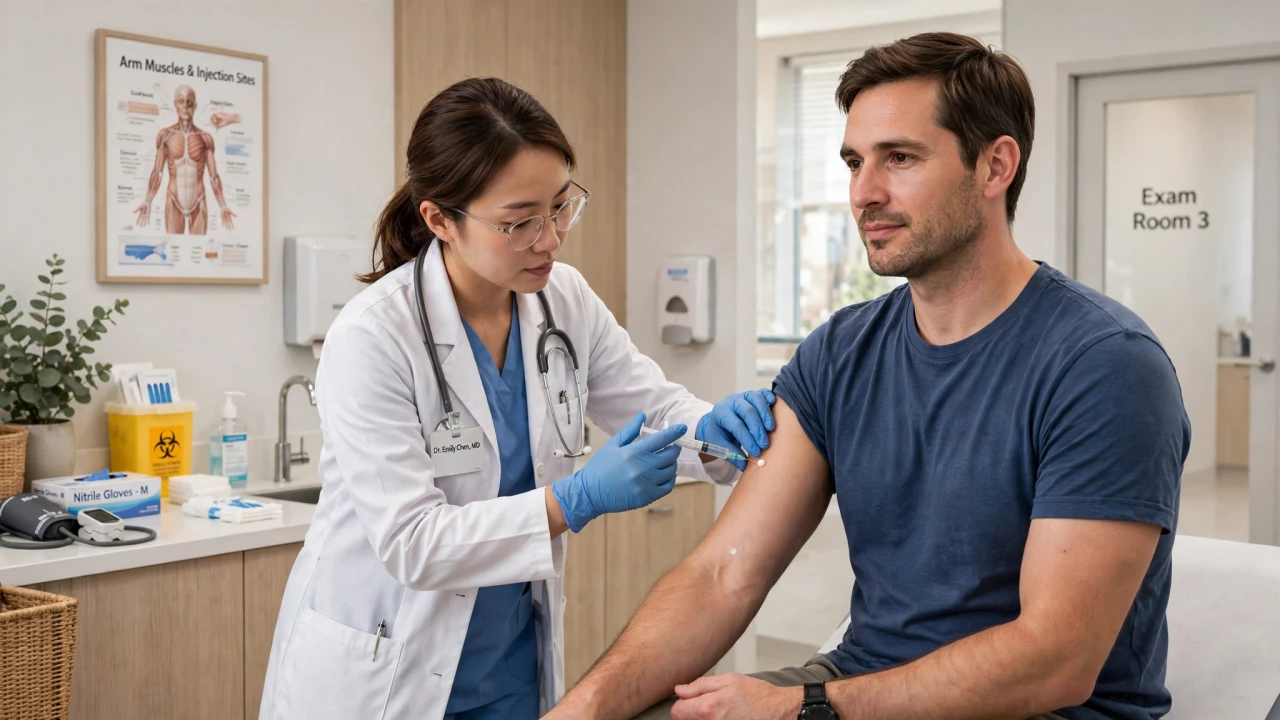
Illustration: a doctor administering a subcutaneous injection to an adult patient in a bright modern clinic
Background
Chronic hepatitis B is a long-term liver infection that, over time, can lead to serious liver disease — including cirrhosis and liver failure — and raises the risk of liver cancer. Keeping the virus suppressed usually means taking antiviral medicine for years, often indefinitely. Today's nucleos(t)ide analogue therapies are effective at holding the virus in check, but they rarely clear the infection itself: functional cure, in which the immune system keeps the virus controlled without ongoing drugs, has remained elusive for most patients.
Antisense drugs take a different approach. Bepirovirsen targets the viral RNA and reduces the amount of hepatitis B surface antigen in the body, which researchers believe helps the immune system regain control of the infection. It is injected under the skin for up to 24 weeks, alongside the patient's existing hepatitis B medicine; patients continue their antiviral treatment for at least 24 weeks after the last injection. Each dose consists of two injections placed at least two inches apart, with injection sites rotated weekly, and patients may self-administer after the first dose.
The drug is not a universal cure, and its safety profile demands vigilance. The prescribing information carries a boxed warning for on-treatment hepatic flares — liver inflammation that can be severe — and for thrombocytopenia, a drop in platelets that can occur suddenly and unpredictably and raises the risk of life-threatening bleeding. Clinicians must monitor ALT and total bilirubin before and during treatment, and check platelet counts before treatment and weekly during it; the drug is contraindicated when platelet counts are below 100 × 10⁹/L, and the label calls for permanent discontinuation if counts fall below 50 × 10⁹/L. Other warnings include worsening renal function and serious inflammatory reactions such as vasculitis. The most common adverse reactions were injection-site reactions, fever, fatigue and headache.
Hibsago is GSK's brand name for bepirovirsen, and Japan has already approved the drug; GSK said it expects decisions from additional regulators in the coming months. The company estimates about 1.7 million people in the United States live with chronic hepatitis B.
Why It Matters
The approval matters because it changes the horizon of what treatment can aim for. For decades, the standard story of chronic hepatitis B has been lifelong suppression: take the antivirals, keep the virus quiet, accept that the drugs never really leave. A therapy that gives one in five eligible patients a shot at stopping all medication while the virus stays controlled — and more than one in four among those with low baseline antigen levels — represents the first FDA-approved treatment designed around that goal.
"For many people living with chronic hepatitis B, treatment can mean taking antiviral medication for years to keep the virus suppressed," said Wendy Carter, acting director of the FDA's Office of Infectious Diseases. "Hibsago provides a new treatment approach that gives some patients the possibility of maintaining control of the virus after all chronic HBV treatment has ended. This approval represents an important advance for people living with this serious disease."
Norah Terrault, chief of gastroenterology and hepatology at USC Keck Medical Center, called it "the start of a new era in treating people living with CHB," in a GSK statement.
The global context sharpens the stakes. According to the World Health Organization's Global Health Estimates, hepatitis B and C together led to the loss of about 1.24 million lives in 2023, mostly through resulting liver cirrhosis and liver cancer — a death toll that has been growing. In Uganda, where hepatitis B remains a major public-health concern, physician and kidney specialist Dr. Robert Kalyesubula welcomed the FDA decision on Friday as a major medical breakthrough, while cautioning that the treatment is restricted to patients meeting specific clinical criteria.
Economics will shape how widely the advance is felt. A finite, six-month course aimed at functional cure could, for qualifying patients, offset years of suppressive therapy and the downstream costs of liver disease — but only carefully selected patients qualify, and the companion diagnostic adds a testing step that health systems must build into their workflows.
Illustration: a pharmaceutical laboratory bench with rows of medicine vials and a syringe under bright laboratory lights
What Happens Next
With the U.S. approval in hand, the next milestones are regulatory decisions elsewhere. Japan has already approved bepirovirsen, and GSK said it expects rulings from additional regulators in the coming months — each of which could widen access to the drug beyond the roughly 1.7 million Americans estimated to live with chronic hepatitis B.
In the United States, the focus now shifts to rollout: identifying eligible patients through the authorized Roche assay, building the weekly platelet-monitoring cadence into clinic workflows, and counseling patients on what the trials actually showed — a real but minority chance at functional cure, with the majority of patients not reaching that endpoint. The detailed phase 3 results, published in the New England Journal of Medicine by Hou, Lim, Buti and the B-Well Study Group, will guide that conversation.
Researchers will also be watching what this approval unlocks. As the first antisense oligonucleotide cleared for hepatitis B, Hibsago opens a regulatory and scientific path for follow-on drugs in the class — and for combination strategies that might push functional-cure rates higher than one in five.
Sponsored: explore today's featured sponsored offers
FAQ
What is Hibsago approved for?
Hibsago (bepirovirsen) is approved together with a nucleos(t)ide analogue for adults with chronic hepatitis B who do not have cirrhosis, have taken antiviral therapy for at least six months, have suppressed HBV DNA, and have hepatitis B surface antigen (HBsAg) of 3,000 IU/mL or less on an FDA-authorized test. The FDA announced the approval on October 20, 2026.
What does "functional cure" mean in the trials?
In the B-Well 1 and B-Well 2 trials, functional cure was defined as undetectable HBV DNA and undetectable HBsAg for at least 24 weeks after stopping all hepatitis B treatment. In GSK's pooled analysis, 19% of patients on bepirovirsen achieved it versus 0% on placebo; among patients with baseline HBsAg of 1,000 IU/mL or less, the rate was 26%.
How is Hibsago given?
The regimen is subcutaneous injection for up to 24 weeks alongside the patient's existing hepatitis B medicine, which is continued for at least 24 weeks after the last injection. Each dose is two injections at least two inches apart, with sites rotated weekly; patients may self-administer after the first dose.
What are the main risks?
The prescribing information carries a boxed warning for on-treatment hepatic flares and thrombocytopenia (low platelets), which can occur suddenly and raise bleeding risk. Clinicians monitor ALT, bilirubin and platelet counts, with weekly platelet checks. The drug is contraindicated below 100 × 10⁹/L platelets and must be stopped permanently below 50 × 10⁹/L. Other warnings include worsening kidney function and vasculitis.
Is this the same drug approved in Japan?
Yes. Bepirovirsen, developed by GSK, has already been approved in Japan under its own process, and GSK said it expects decisions from additional regulators in the coming months. The FDA granted the U.S. application Fast Track, Breakthrough Therapy, and Priority Review designations.
Sources
- U.S. Food and Drug Administration, press release, "FDA approves first-of-its-kind chronic hepatitis B treatment," October 20, 2026
- Contagion Live, "FDA Approves Bepirovirsen, First Antisense Therapy for Chronic Hepatitis B," October 2026 (approval details, B-Well 1 and 2 pooled results: 233/1220 functional cure vs 0/614; dosing; boxed warning; Norah Terrault quote; GSK 1.7 million U.S. estimate; Roche Elecsys assay authorization)
- PharmExec, "FDA Approves Hibsago (Bepirovirsen) for Chronic Hepatitis B," October 2026 (Fast Track/Breakthrough/Priority Review; Japan approval; Tony Wood quote on six-month functional cure)
- Vivid Voice News (Kampala), "US approves new hepatitis B drug that may help some patients stop treatment," October 23, 2026 (Dr. Robert Kalyesubula reaction)
- WHO Global Health Estimates (via global2030.net, October 2026): hepatitis B and C led to the loss of about 1.24 million lives in 2023, mostly through liver cirrhosis and liver cancer
Comments
Post a Comment